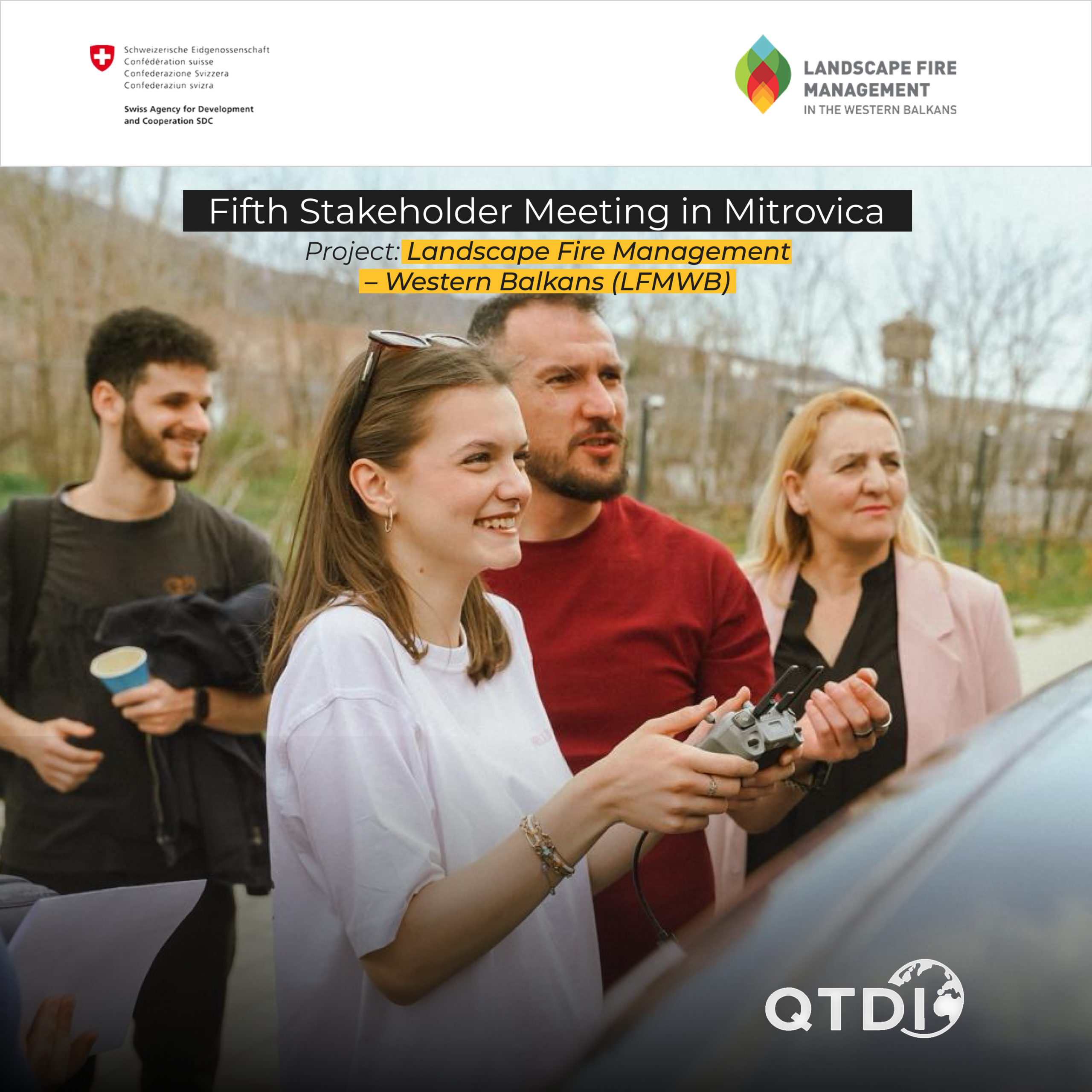
On April 7, 2026, Qendra për Transferimin e Dijes dhe Inovacionit (QTDI), within the Landscape Fire Management in the Western Balkans (LFMWB) project, organized a practical training session for students at the Public International Business College Mitrovica.
This LFMWB student training at IBCM brought students together in an interactive environment. As a result, they strengthened their technical and digital skills in landscape fire management and disaster risk prevention.
Empowering Youth Through Practical Learning
Prof. Asst. Milan Veselinovic and Prof. Ass. Afete Shala Musliu, Working Group Expert and Event Coordinator, opened the training and emphasized the importance of engaging youth in environmental protection. She also highlighted how hands-on learning helps build stronger local capacities.
Moreover, the session followed a practical approach. It combined technical knowledge with real-world application and directly supported the LFMWB project’s goal of improving community resilience to wildfire risks.
Hands-On Training in Drone Technology
One of the main highlights of the training was the drone session led by Bardhyl Dobroshi. During this session, students actively explored how drones support field operations.
Specifically, students:
- Learned how drones monitor fire-prone areas
- Explored field setup procedures and equipment calibration
- Practiced live streaming and real-time observation
- Identified potential fire risks in mountainous terrain
In addition, participants operated drones themselves. This hands-on experience helped them better understand navigation, terrain analysis, and early fire detection in real-life scenarios.
Digital Mapping Tools for Field Application
Afterward, Gresa Neziri guided students through digital mapping tools used in disaster risk management.
During this session, students:
- Installed mapping applications on their mobile devices
- Practiced using these tools in field conditions
- Learned how spatial data supports decision-making during emergencies
As a result, students directly applied digital tools and clearly understood their role in real-time environmental monitoring.
Presentation of Project Outputs
Alongside the practical sessions, the team presented key LFMWB project outputs.
These included:
- The Action Plan Document, which outlines strategic approaches to landscape fire management
- Project brochures, which explain the tools, methods, and expected impact of the project
Strengthening Local Capacities and Awareness
Overall, this training marked another important step in strengthening local capacities and raising awareness among young people.
Furthermore, by combining technology, practical experience, and youth engagement, QTDI continues to support more prepared and resilient communities across the Western Balkans.


